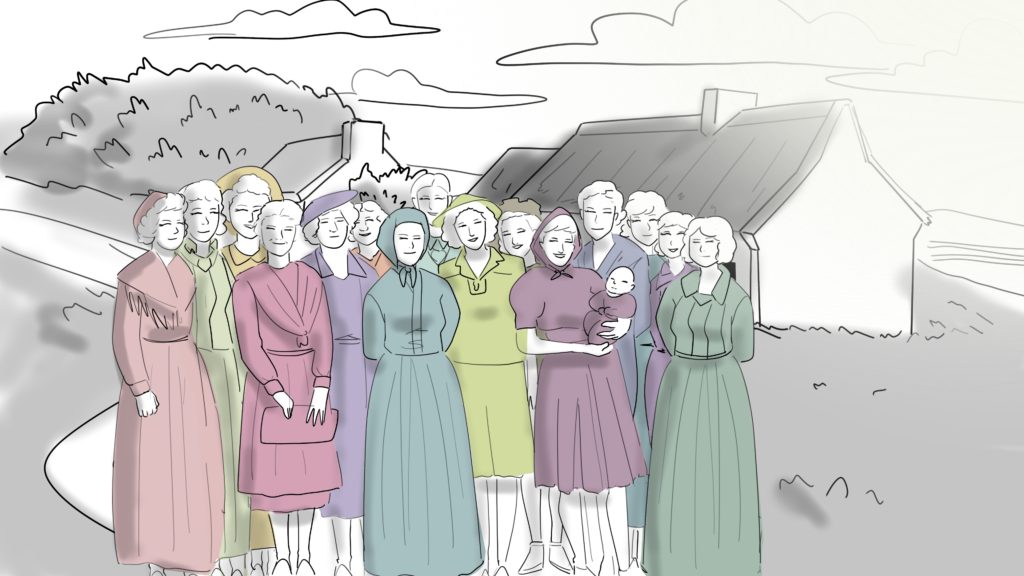
 It was Saturday, May 2, 1942, and that meant the Irish Wives of Village Rossinver were wearing their Sunday best.
The widows of the village didn’t bother to get dressed up any longer, as they had already gotten the news their husbands had been killed in action.
It was 1942, and all the living husbands of the village were off fighting the Germans or the Japs or were dying by the hands, or bullets or bombs of the Germans or the Japs.
Their secluded village had no telephones.
If their men would be coming home, it was always on a Saturday.
The last one to return was James O’Phalen, 8 Saturdays ago. He was missing one limb and one eye, and was still uncontrollably shaking from shell shock, but it was their James O’Phalen, in the partial flesh, returned to them alive. There was much rejoicing.
So, the 30 remaining Wives of Village Rossinver, dressed to impress, left their children with the underdressed widows.
They rode horses and horse-pulled carts 10 miles to the main road, where their only bus stop stood, and awaited their weekly bus.
They had no idea if any of their husbands would be on that bus. They also knew there might be a package from the government with their name on it. The package included a box and a letter. The letter expressed the sincerest of condolences at the loss of their husbands who had died expressing nothing but the extremes of bravery, courage, valor and patriotism. The box held a Victoria Cross.
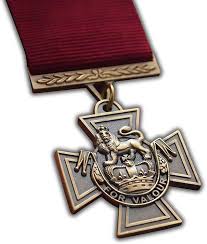
All they had to hear was the bus driver say, "Package for Mrs. " followed by their last name when the bus door opened, and they knew.
The conversion from wife to widow was instant and unavoidable and was almost always accompanied by fainting.
Realizing their husband’s life had just been traded for a letter and a mass produced medal, rightfully had the wife, pardon me, the freshly minted widow, feeling extremely cheated.
It was funny, the letters never said that their husbands had died crying and cowering in the corner of a bunker somewhere, begging for their lives, or were shot in the back as they retreated as soon as the enemy appeared.
The letters especially left out when their husbands were enjoying a brothel when bombs started falling. I am sure some soldiers died in many other less than valorous ways, but those stories never seemed to make it into the letter-medal-in-a-box combo package.
There they stood, 30 beautiful Irish Wives, at their bus stop, 10 miles away from home, waiting for their weekly bus.
No words were ever spoken for these were the most solemn of moments, but also filled with the greatest selfish hopes.
Later in life, memories of these moments would bring on extreme guilt. For each of them were praying their damndest that if there were any packages on that bus, they would be addressed to anyone but them. And also hoping that their husband, in one piece, would be the one exiting the bus. In their hearts though, they knew that men in one piece would not be coming home until the war was over or until they had given their life, or their mind and body, for their country.
They loved the other wives as much as sisters. How could they have thought such horrible things?
They always saw the white exhaust of the bus over a far hill long before hearing the engine.
For all of them, this was a surreal time where time seemed to stop and not a breath was taken. All of their stomachs were instantly in knots.
They stood up straight and made sure they had the smile of a new bride for their husband, should he appear, when that bus door opened.
There would be 174 more Saturday trips to the bus stop for the dwindling number of the Wives of Village Rossinver, until the war officially ended on September 2, 1945.
Packages delivered on Saturdays, not husbands, became the norm.